Skip to content

NeuronFRAMES Hardware

Low-cost devices built by the NeuronFRAMES team that turn everyday hand practice into measurable data, in the hospital and at home.

  1. 01ADL Rehabilitation Glove
NeuronFRAMES ADL rehabilitation glove
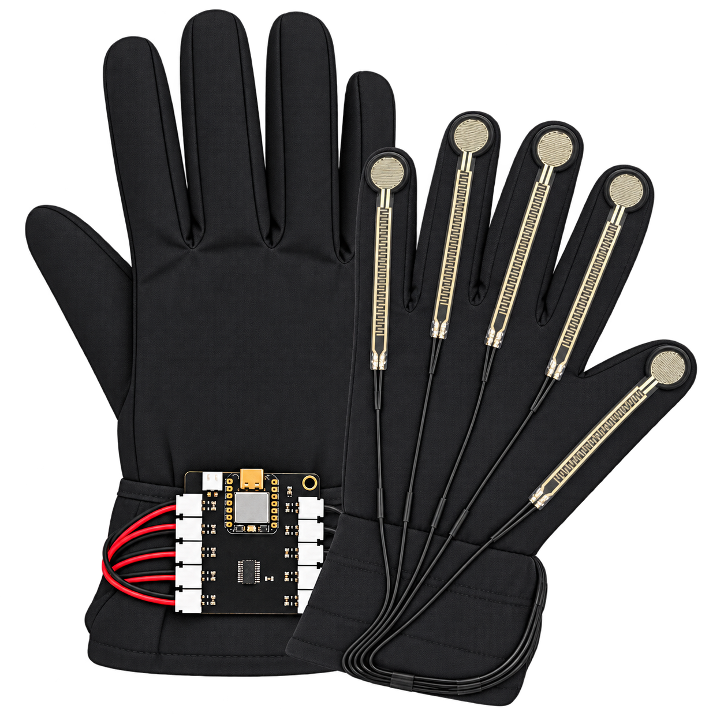
This is a representation of where the electronics will be placed.

ADL Rehabilitation Glove

A wearable glove for patients who need hand therapy, including after surgery or a stroke, with cognitive impairment, or with muscle weakness. While the patient practices activities of daily living, such as drinking from a mug, brushing teeth, or combing hair, the glove measures the force of each finger and sends it wirelessly to the NeuronFRAMES software, where it is processed, shown, and recorded.

One multifunctional glove works across many different daily tasks, so there is no need for a separate training device for each exercise.

Sensors
10 force-sensitive resistors: a round sensor on each fingertip and a long sensor along each finger
Processor
XIAO ESP32-C3 on a custom printed circuit board, hidden inside the glove
Battery
3.7 V 750 mAh lithium battery, estimated at around 24 hours per charge
Connection
Wireless, straight to the NeuronFRAMES software
Force range
Calibrated for 3 to 20 N, the range used in everyday hand tasks
Setup
A short calibration and a few seconds of zeroing; no technical expertise needed

From Putting It On to Playing

Each step follows the procedure validated in our research, kept simple enough for a therapist in the clinic or a patient at home.

Put On the Glove

Ten force sensors sit inside the glove: measuring individual finger force. The board and battery are hidden inside, and the glove connects wirelessly to the software.

Three-Point Calibration

Once a day, a simple calibration process is performed to ensure the accuracy of the force measurements. The software fits a line for every sensor, so each of the ten reads true force.

Zeroing Before Each Session

With the hand relaxed and resting, the glove records a fresh baseline and resets itself to 0 N. This cancels the slow drift every low-cost sensor has, without any tools.

Everyday Tasks, Measured

Drinking from a mug, brushing teeth, combing hair. As the patient practices real daily activities, the force of every finger is recorded live for medical personnel to review.

Play, Adapt, Together

A rhythm game turns grips into falling notes. Adaptive Friendly Training lowers or raises the force needed to match each patient's level, and family members can join in at home.

Interested in the Equipment?

Hospitals, clinics, and research partners can contact us about trials, deployments, and collaboration.

Get in Touch